Ventilation modelling plays a vital role in modern underground mining. As mining operations become deeper, more complex and increasingly data driven, engineers rely on ventilation models to understand how air moves throughout a mine, evaluate operational changes and support safer, more efficient planning.
A ventilation model is far more than a digital representation of an underground network. When developed and maintained correctly, it becomes a trusted engineering tool that helps identify potential risks, optimise airflow, assess future developments and support informed decision making. However, the value of any model depends entirely on its quality. A model built on inaccurate information or left unvalidated over time can quickly become unreliable, reducing confidence in the engineering decisions based on it.
Building a dependable ventilation model requires more than simply entering data into software. It demands a structured engineering approach that combines accurate information, ongoing validation and a clear understanding of how mining operations evolve over time.
Below are five key principles that contribute to reliable ventilation modelling and help engineers maximise the value of their simulation tools.
Build on Accurate and Reliable Data
Every ventilation model begins with data, and the accuracy of that data determines the reliability of the final model. Incorrect airway dimensions, outdated resistance values or missing ventilation controls can introduce errors that affect every simulation. Before modelling begins, engineers should ensure that information collected underground reflects current conditions. Survey information, airway dimensions, fan specifications, regulator settings and ventilation control devices should all be verified wherever possible.
Reliable data also includes understanding operational conditions such as production schedules, equipment heat loads and airflow measurements. These factors directly influence ventilation performance and should be incorporated into the model where appropriate. Maintaining consistent data collection procedures across engineering teams improves confidence in model inputs and reduces the likelihood of discrepancies over time. Even small inaccuracies can compound throughout a ventilation network, making careful data management one of the most important aspects of successful modelling.
Investing time in gathering accurate information provides a stronger foundation for every simulation that follows.
Validate Before You Simulate
A ventilation model should never be accepted simply because it has been built successfully. Validation is essential to confirm that the model accurately reflects underground conditions before it is used to support engineering decisions. Validation involves comparing simulated airflow quantities, pressures and operating conditions against measurements collected underground. Differences between the model and actual mine conditions should be investigated carefully, allowing engineers to identify incorrect assumptions or outdated information.
This process is not about achieving a perfect match but rather ensuring that the model behaves in a way that accurately represents the ventilation system. Regular validation becomes increasingly important as mining activities progress. Development headings advance, infrastructure changes and ventilation controls are adjusted, all of which influence airflow throughout the mine.
Engineers who routinely validate their models build greater confidence in simulation results, making future scenario analysis significantly more reliable. Without validation, even sophisticated software cannot guarantee meaningful engineering outcomes.
Design for Tomorrow, Not Just Today
Mining operations are constantly evolving. New production areas are opened, existing workings are closed, infrastructure expands and production targets change throughout the life of a mine.
A reliable ventilation model should therefore support long-term planning rather than simply reflecting current conditions. Scenario analysis allows engineers to evaluate how future developments may influence airflow, fan performance and ventilation requirements before physical changes take place underground.
Considering future mine layouts during the modelling process helps organisations identify potential ventilation constraints early, reducing costly redesigns or operational disruptions later. Forward-looking modelling also supports capital planning by allowing engineering teams to assess future infrastructure requirements such as additional fans, regulators or ventilation raises.
Rather than reacting to operational changes after they occur, reliable ventilation models allow engineers to evaluate multiple options in advance and make informed decisions based on engineering evidence.
Planning ahead ultimately improves both operational efficiency and long-term ventilation performance.
Keep the Model Current
A ventilation model is not a one-time engineering exercise. Like the mine itself, the model must evolve continuously. As mining progresses, airway conditions change, ventilation controls are adjusted and production areas shift. If these changes are not reflected in the model, its accuracy gradually decreases.
Regular updates ensure that the model continues to represent actual underground conditions and remains a dependable engineering resource. Establishing a structured review process allows engineering teams to incorporate new survey data, ventilation measurements and infrastructure changes on a routine basis.
Many organisations align model updates with planned engineering reviews or ventilation surveys, ensuring that the digital model remains synchronised with field conditions. Maintaining an up-to-date model also improves collaboration between ventilation engineers, planners and operational teams, providing everyone with a consistent understanding of current network performance.
An actively maintained model becomes increasingly valuable over time, supporting operational planning, risk assessments and long-term ventilation strategies.
Support Engineering Judgement, Not Replace It
Ventilation software is an incredibly powerful engineering tool, but it should always complement professional expertise rather than replace it. Simulation results provide valuable insight into airflow behaviour and potential operational outcomes, yet every result should be interpreted within the broader context of mining experience, operational knowledge and engineering judgement.
Unexpected results often present opportunities for further investigation rather than immediate conclusions. Experienced ventilation engineers understand how underground conditions, operational practices and environmental factors can influence system performance beyond what any model alone can predict. Reliable decision making comes from combining accurate modelling with professional engineering interpretation.
The best engineering outcomes occur when simulation software and engineering expertise work together, enabling informed discussions, better planning and more confident operational decisions.
Technology provides the analysis, while engineers provide the understanding needed to apply those insights effectively.
Building Confidence Through Better Ventilation Modelling
Reliable ventilation modelling is built on a combination of accurate data, regular validation, forward-thinking planning, continuous maintenance and sound engineering judgement. Each of these principles strengthens the model’s ability to represent real underground conditions and provide meaningful insight for engineering teams.
As underground mining becomes more complex, dependable ventilation models are increasingly important for improving planning, evaluating operational changes and supporting safe, efficient mine ventilation strategies. Organisations that invest in maintaining high-quality models are better positioned to respond to changing conditions, optimise ventilation performance and make informed engineering decisions with confidence.
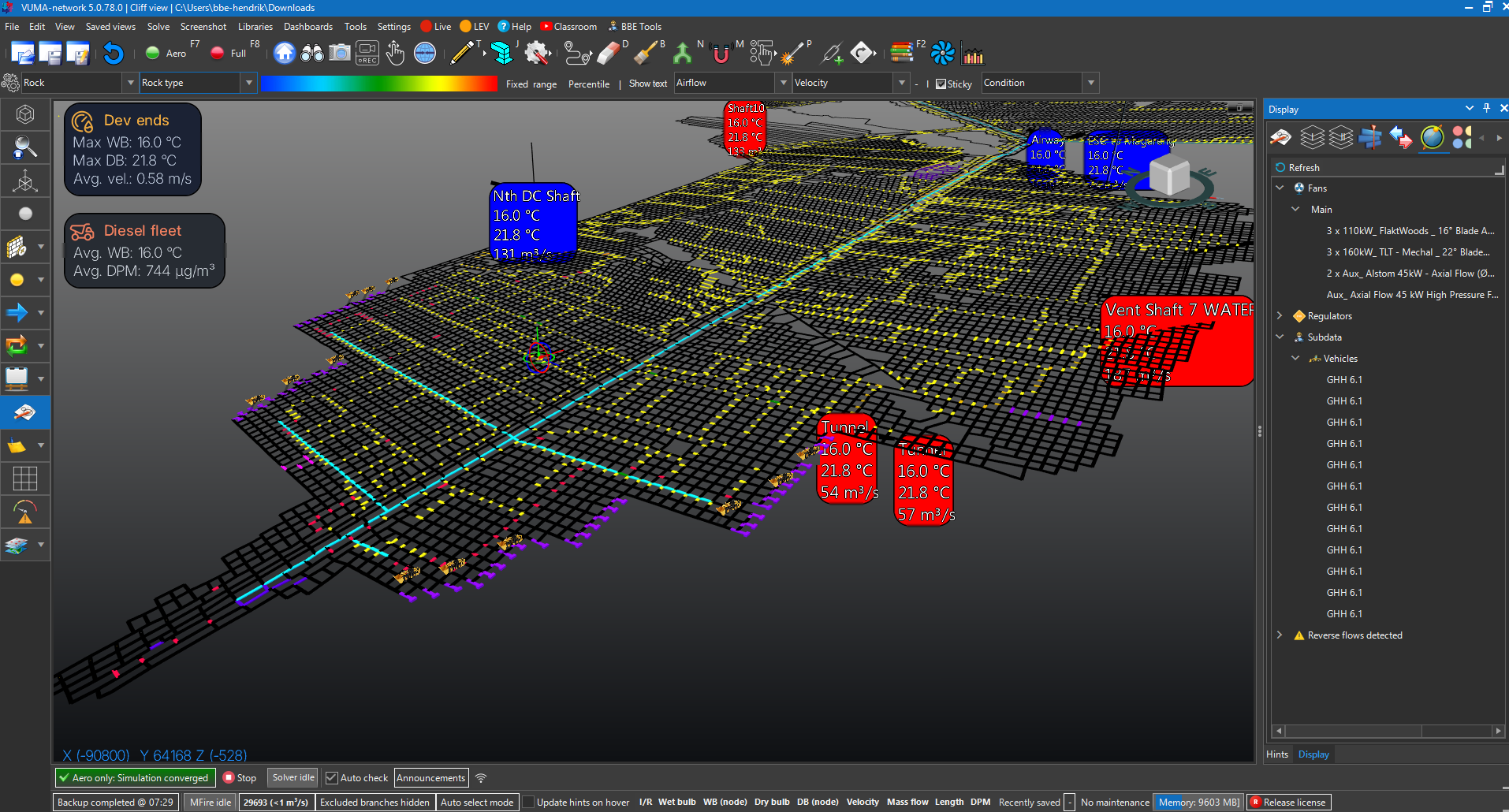
VUMA has been supporting mine ventilation professionals for more than three decades through advanced ventilation simulation software developed alongside industry expertise. Designed to model complex underground ventilation networks, VUMA helps engineers analyse scenarios, evaluate operational changes and make informed decisions backed by reliable simulation results.
Whether supporting day-to-day ventilation management or long-term mine planning, VUMA provides the tools needed to transform engineering data into practical operational insight, helping ventilation professionals build greater confidence in every decision they make.