Mining operations are constantly evolving. Development progresses, production requirements change, ventilation infrastructure is modified and operating conditions shift over time.
With every change comes an important question for ventilation engineers:
What will happen if we change the system?
Answering that question before implementing a change can be challenging. Physical testing underground may be disruptive or impractical, while relying on assumptions can introduce uncertainty. This is where ventilation scenario modelling becomes a valuable engineering tool.
What-If Analysis allows engineers to explore potential changes within a ventilation model and assess their possible impact before changes are implemented underground. By comparing different scenarios, engineers can investigate potential outcomes, identify constraints and develop a clearer understanding of the options available.
The objective is not for software to make the decision. It is to give engineers better information on which to base it.
What Is Scenario Modelling?
Scenario modelling involves creating alternative versions of a ventilation network to investigate how specific changes could affect its performance. Rather than permanently changing the existing model, engineers can assess a proposed scenario and compare its results with the current or baseline condition.
Scenarios may involve changes to mine development, airway configuration, fans, ventilation controls, airflow requirements, production areas or other ventilation infrastructure. This creates a controlled environment where engineers can investigate potential changes before committing to them underground.
Why Test Changes Before Implementation?
Ventilation networks are interconnected systems. A change in one area can influence conditions elsewhere. Introducing a new development area may alter airflow requirements and distribution. Adjusting a ventilation control can influence how air moves through connected workings, while changes to fan operation can affect airflow and pressure across the network. The impact of a change may therefore extend beyond the area where it is being considered.
Scenario modelling allows engineers to investigate these potential effects in advance. This can help identify constraints, compare approaches and determine whether additional ventilation infrastructure or operational adjustments may be required. It provides an opportunity to investigate the consequences of a proposed change before those consequences become an underground operational issue.
Evaluating Future Mine Development
Future mine development is a particularly important application of scenario modelling.
As a mine expands, ventilation requirements can change significantly. New workings may require additional airflow, existing ventilation routes may need modification and infrastructure may need to accommodate changing production requirements.
Engineers can represent proposed development within a ventilation model and assess how it could influence the wider network. Different development scenarios can then be compared to investigate potential airflow requirements, network limitations and infrastructure needs.
This allows ventilation requirements to be considered alongside mine planning, rather than only after development has progressed. By examining potential future conditions early, engineers can identify areas that may require further investigation and consider possible solutions before implementation.
Exploring Fans and Ventilation Controls
Fans and ventilation controls directly influence network behaviour and are therefore important when evaluating proposed changes. An engineer may need to assess the potential effect of changing fan operation, adding ventilation capacity or modifying controls to accommodate new requirements.
Rather than making the change immediately and observing the result, alternative configurations can first be explored within the model. This allows engineers to compare potential outcomes and consider whether a proposed configuration is likely to provide the required ventilation performance.
It also provides a broader view of the network. A change intended to improve conditions in one area may influence airflow elsewhere, making it important to understand the overall response rather than focusing only on the original problem.
Comparing Ventilation Strategies
Ventilation challenges do not always have a single solution. Engineers may have several possible approaches, each with different implications for network performance, infrastructure requirements and future operations. Scenario modelling provides a structured way to investigate these alternatives.
For example, different ventilation configurations can be modelled and compared under similar conditions. Engineers can then examine how each approach affects the network and determine which options warrant further consideration.
This can support questions such as:
- How could a proposed approach affect airflow distribution?
- What infrastructure may be required?
- Could an alternative configuration provide better performance?
- What constraints could emerge as the mine develops?
The model does not determine which option should be selected. Instead, it provides information that helps engineers evaluate the available alternatives.
Identifying Potential Constraints
Another benefit of What-If Analysis is the ability to identify potential constraints before they become operational problems. A proposed change may appear straightforward when viewed in isolation, but its wider effect on the ventilation network may be less obvious.
For example, future development could increase ventilation demand in an area where capacity is already limited. Similarly, modifying one part of the network could influence airflow distribution in another.
Modelling these scenarios gives engineers an opportunity to investigate such interactions before implementation. This can help highlight areas requiring additional analysis, infrastructure planning or operational consideration.
Engineering Judgement Still Matters
The value of scenario modelling ultimately depends on how engineers interpret the results.
A simulation can show how a ventilation network responds to a particular set of conditions, but it cannot determine whether those conditions accurately represent the mine or what action should follow.
Engineers need to consider the quality of the input data, the assumptions behind the scenario and whether the results are consistent with expected underground behaviour. Experience and professional judgement are therefore essential when interpreting model outputs.
Validation also remains important. Comparing modelled conditions with actual measurements helps establish confidence in the baseline model and provides a stronger foundation for evaluating future scenarios. The role of modelling is to provide greater clarity, not to replace the engineer responsible for understanding and applying that information.
Starting With a Reliable Baseline
Scenario analysis is dependent on the quality of the model being used. If the baseline does not accurately represent the current ventilation network, the results of a proposed scenario may not provide a dependable indication of what could happen underground.
For this reason, engineers need to maintain relevant model information as mine conditions change. A reliable baseline makes scenario comparisons more meaningful and provides greater confidence when evaluating proposed changes. This also reinforces the importance of treating ventilation modelling as an ongoing engineering activity rather than a once-off exercise.
How VUMA Supports What-If Analysis
VUMA provides engineers with tools to investigate potential changes to mine ventilation systems through simulation and scenario analysis.
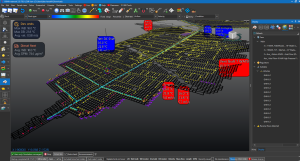
Its What-If Analysis capability allows alternative ventilation conditions to be explored within the model before changes are implemented underground. Engineers can use this capability to investigate potential changes involving mine development, ventilation infrastructure, fan operation and network configuration.
The purpose is not to automate the engineering process. Instead, VUMA provides greater visibility into how the ventilation network may respond to different conditions, helping engineers assess alternatives and investigate potential constraints.
Making Better Use of “What If?”
Every change to a ventilation network raises questions about its potential consequences.
What-If Analysis provides engineers with a practical way to explore those questions before implementation. By modelling different scenarios, engineers can investigate potential outcomes, compare alternatives and identify areas that may require further consideration.
When combined with accurate data, validation and professional engineering judgement, scenario modelling becomes more than a simulation exercise. It becomes a valuable part of ventilation planning.
The question isn’t simply “What if?” It’s what you can learn before you make the change.